Showing posts with label finance. Show all posts

Wednesday, May 6, 2015

How Do You Get the Best Deal on a Car: Tip 2


So you've done all the possible research, test drove the vehicles and narrowed your choices. What next? Now you start dealing with the salesperson.

This is the most frustrating portion of the process, for both ends of the transaction. The seller and the buyer trap themselves in a cat and mouse game of not wanting to give up any information or even commit to anything. With good reason. Both stand to win or lose hundreds if not thousands of dollars depending on the decision they make. Here are a few simple steps to make this process easy and positive.


  1. Make sure when comparing prices across several dealers that you are comparing apples to apples. Again, if a deal seems to too good to be true, it probably is.
  2. Ask them to either fax or email actual figures/invoice, etc. Get everything in writing with exact VIN of the vehicle also. Don't fall for the bait and switch.
  3. Many times they will ask for your personal information in order to release pricing information. you can give them as much information as you'd like except for your Social Security number. They don't need that to give you pricing information. Even if you want payment information they can estimate that with an educated guess for the interest rate.
  4. If the salesperson will not give you the pricing information, hang up and call back, ask for a sales manager. If for some strange reason they still will not give you any information, maybe that isn't the dealer you want to do business with.
  5. They may hit you with lines such as "what price are you looking for?" or "what's the best price you've heard so far?" No need to hide anything from them. Make up a price somewhere at or below invoice. That'll get their attention.
  6. Once you have all the offers you want, sit back and decide. Remember, price is only one portion. Buy the best-priced car that you love. Not the lowest-priced car you like. 
Also Read This:

Monday, March 30, 2015

Should You Buy Service Contracts, GAP Insurance?

So you've found the perfect car, negotiated the best price. Everything is perfect then you go sign all the paperwork and the Finance Manager gives you a presentation about additional products available to you. Service contracts, GAP insurance, Credit Life & Disability, Etch, Lifetime oil changes, coating, undercoating, the list is almost endless. Most products are useful and worth something.Ultimately it is the consumers choice to purchase these products or not. But I will give you some valuable information to make an informed decision when the occasion arises.


Service Contracts : These are the most difficult to choose. The plans offered can number in the dozens with slight varied coverages but large price differences. Consider these things when choosing to purchase one:


  • If purchasing a new car, how long will you keep it and ow long is the manufacturer's warranty? Most consumers trade in after 2 or 3 years and most manufacturer's warranties will cover the vehicle that long. If purchasing pre-owned ask when the coverage begins, at current mileage or at mile 1? You want to buy a service contract that starts at your current mileage.
  • When choosing a coverage, I don't believe in choosing anything but the best coverage. If you're going to pay for coverage, make sure it covers everything you need covered. The last thing you need is to pay for coverage and find out the one time you need it, "that's not covered."
  • Ask the name of the service contract company. Not all companies are the same. Especially if the coverage is backed by the dealer. Many times dealers require you take the vehicle to them instead of any other repair shop. That can be difficult if you don't live in the area or their service department is weeks behind.
  • While the finance manager will try to sell you on payment, ask the price of the service contract and negotiate that. 
  • Lastly, keep in mind that a service contract can be purchased after the sale. Either from the dealer or hundreds of sources online. Usually the difference is you must pay for the service contract cash but some companies do offer short installment plans.

GAP Insurance : Many consumers do not understand what GAP Insurance is, but most buy it. GAP insurance basically covers the negative equity on your loan in case of total loss. Meaning if you wreck your new Tundra, your insurance pays it's value and GAP pays any difference without you having to pay on a vehicle you can't drive.

  • Unlike service contracts, GAP insurance must be purchased at the time of financing. You can not add it to your loan later.
  • Before you buy it, call your insurance agent and see if you already have that coverage or ask the cost of adding it if it is available.
  • Do not buy if you're in equity at time of purchase or financing short term where you may never be in negative equity and have no need for GAP
  • Other than that I highly recommend purchasing GAP insurance. It is fairly inexpensive and can save you thousands at the best time.
Credit Life & Disability : The name of this insurance is self explanatory and can be bought together or individually. Credit Life will cover the entire loan in case of your death and Disability will make your payments if you become disabled during the life of the loan.

  • Credit Life is usually pretty straight forward but I would ask what the limitations there are as far as age, amount to pay, etc.
  • Credit disability is more complex as far as it's usefulness. Ask the F&I manager what the requirements for disability are? How soon after disability will the payments start? What's the largest monthly payment they will pay? For how long?
  • Again ask who the insurer is. Not all insurance companies are the same.
  • I do recommend these insurances depending on personal situation. If you're in a one income household, expecting a child or planning a pregnancy, have medical conditions, etc.  No one likes to talk about death or health but these insurances are like life insurance, they're for the ones that we leave behind.
Lifetime oil changes, Etch, coats : 

  • Lifetime oil changes can be a great purchase. If you keep your vehicle long enough. Assuming you change your oil 4 times a year at an average cost of $40 you would have to keep the vehicle for at least 3 and a half years to recoup a cost of $499. Calculate that when deciding.
  • Coats (undercoating, paint coats, fabric coating, windshield, etc.) to me are a waste of money. These products are not long lasting and do not add value to the vehicle. Basically you pay hundreds of dollars for someone to spray your vehicle with something that may or may not do something.
  • Etch. Etch is usually marketed in larger cities. It involves etching the Vin number of the vehicle to all parts of the vehicle in order to prevent the vehicle to be parted out if it is stolen. It also helps prevent auto thefts since thieves find it more difficult to rid themselves of an entire car. This product can be inexpensive and there is a value to it depending on your risk of having your vehicle stolen.
Always go to a dealership armed with information and ask questions. The staff is there to help you in your decision process not just to usher you through like cattle.

Thursday, March 19, 2015

Which to Choose? The Rebate or the Rate?


Manufacturer's for years have enticed the consumer with either huge rebates on the purchase of a new vehicle or extremely low interest rates through their direct lender. Rarely do they offer both. So the consumer is left to decide which to choose : the money or the interest rate?

A few things to consider. First, what interest rate would banks approve you for without incentives? If Chevrolet is offering 1.9% for qualified buyers, could you qualify for that rate or something close without accepting that offer? That is important to know because if you qualify for that low financing then you can take the rebate and get the rate, win win! But let's say you don't qualify. The easiest way to decide what is best for you is to go to a financial calculators website and fill in the boxes for your particular situation. For instance if the manufacturer qualifies you for a 7.9% rate on a $35,000 loan but normally you would qualify for say 15.9%, taking the lower interest rate instead of the rebate would save you $4,113! Simply plug in the numbers and the calculator will give you the best scenario for you.


The other thing to consider in choosing a low interest rate or the rebate is negative equity on your trade in if trading your auto. If your negative equity is high enough you may be forced to accept the rebate since banks limit the amount a consumer can finance on vehicles. Just because you're willing to pay $20,000 for a Dodge Neon doesn't mean a bank will be happy to loan that amount on that car. So depending on your situation you may be forced to accept the rebate in order to be approved for financing.

Arrive at the dealership armed with this information and your purchase experience will be easy and relaxing. Your biggest worry only finding the right car for you!


Sunday, March 15, 2015

What is the Best Time to Buy a Car?

As consumers we always want the best deal, the edge to receive the absolute best of everything. Buying a vehicle is most people's second largest purchase in their life behind the purchase of their home. And most of us only do it once every few years. So how do you assure the best price and deal on your purchase? There are infinite ways. One easily overlooked is timing. When should you purchase?


While generally nothing is set in stone in the retail business, near the end of the month is usually the best time of the month for you to purchase. Here are the ways and reasons why :

1. New car dealers have quotas and goals to meet with their Franchise. Chevrolet may ask a dealer to sell 100 trucks. If they do so, Chevrolet will pay the dealer a set amount of money per vehicle. So when a dealer may have said no to a short deal earlier in the month, that one sale could be difference between hitting that goal or not. 


2. Even a used car dealer may have incentive to move units at the end of the month at lower gross to either rid himself of an "old age" unit or a vehicle he owns way over book. If he had a good month he may take losses on a car or two instead of risking another book drop an losing even more thousands of dollars.

3. If you like the incentives offered in that month, i.e. rebates and interest rates, don't wait to see if the next month they are better. Some do run out. During the summer months some manufacturers offer a limited amount of tax breaks on their lease programs that saves you thousands in real money and monthly payment. But they run out. If you see something you like don't pass it up looking for the next better deal.

4. Salespeople also have bonus levels and personal goals they need to reach. Their pay plan may include a large bonus if they sell a certain of cars or maybe just new cars. A "skinny" deal could mean hundreds of dollars to the salesperson. Also, manufacturers pay spins to salespeople for each new vehicle sold. The amounts increase on a tier level. For instance selling 3 new cars may pay him $100 per unit. Selling 9 new cars may pay him $300 per unit retro back to 1. Meaning the ninth unit pays him $1200!


Remember these points next time you're in search of new vehicle. I would not wait to the last day personally but to each their preference. Arrive at the dealership knowing you have bargaining power!


f99a6d6831eefafba48834ad0c839e0b9c74ddde414e0aef5a

Tuesday, March 3, 2015

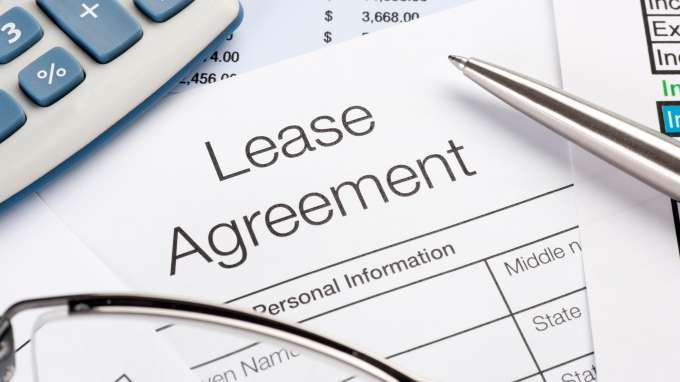
Lease or Buy? Which is Best for You

Choosing to buy or a lease a new vehicle is a difficult decision.Especially since a lease is difficult to understand. The correct choice depends on your particular situation. There are pro's and con's to both.


First, let's get the basics of a lease.The first thing to understand in a lease is you are not buying the car. Essentially you're renting it.They allot you certain number of miles per year. If you go over that there's a fee. You're payment is only to cover the depreciation of the vehicle and there isn't an interest rate, in a lease it's called a money factor. It is still calculated on your credit rating. Those are the basics of leasing, so why lease instead of buying?


The best part of leasing is you get to drive a new car. A lease is best when applied to a new car. Leases are anywhere from 12 to 60 months. Since you only pay on the depreciation the payment is usually lower and at the time of turn in you are not upside down. Once the lease is up you're free to purchase another vehicle without having to worry about negative equity.It is best to do a lease for the a term equal to or less than the factory warranty of the vehicle. That way you never have to worry about repairs or such.

A lease is also good if you're trying to trade out of a vehicle with negative equity. If a car has a good residual value it can handle the negative equity brought into the deal without your payments skyrocketing. I recently trade out of a vehicle I was approximately $4,000 upside down and paying $471 a month and leased a brand new vehicle with no money down and my lease payments are $353!
The two hardest parts of leasing though are first, money down is almost always a requirement depending on the manufacturer. First, paying taxes upfront is almost always required plus your first payment and some leases also have an acquisition fee. then depending on the lease deal, a certain amount of money down may be required in order to meet the depreciation requirements. Large sums of down payment like that can be difficult, but as all parts of an auto purchase, that is negotiable.


Second, the limit in miles scares most buyers. The mileage range can be anywhere from 10,000 to 15,000 a year. 15,000 is usually plenty for most people. But if you feel you may go over that amount you can pre-pay for those miles in your lease, your payment just goes up. At lease turn in if you didn't pre-pay for your miles you will have to pay at that time. Usually at a rate .15 cents a mile. You also have to take care of your vehicle. Remember, a lease attempts to predict the value of a vehicle assuming it is in good condition. If at lease turn in your vehicle is missing the front end, you will have to pay for whatever the dealer feels that will cost or depreciate the value. You can also just purchase your vehicle at that time if you love it enough.
If you find yourself trading out of your vehicles every 2 to 3 years, a lease is for you. If you want a low payment on a top of the line vehicle, a lease is for you.

Saturday, February 21, 2015

Which is better : Buying Cash or Financing?

Consumers always ask, which is better, to purchase a vehicle cash or to finance? While every situation is unique and varies, the consensus by financial Gurus such as Dave Ramsey is to purchase cash. While I am no financial genius, I am against purchasing a vehicle cash in most situations.There are a few occasions where I feel a cash purchase is the best option, but there are many factors to consider.


First, you have to decide how much vehicle you're trying to buy and what purpose will it serve. I once bought a Saturn Vue cash for ,y daughter's first car. I think we paid $3500. The Vue had over 100,000 miles and over 10 years old. It wasn't meant to be a car to last a lifetime or be driven to the ground. It was just her first car to last her a few years. In this day and age, $5,000 doesn't buy a whole lot of car. So you have to tread lightly on a purchase in which the vehicle may not be in the best condition. So, decide how much do I want to spend? What do I want to get out of my purchase?

Now, for larger purchases in the $20,000, $30,000 or $40,000 range why buy cash? Financial experts say you don't want to pay interest over time and that will save you thousands. True. But how much money will you lose by pulling such a large amount from your account? Most individuals who have that much money available in the bank or through investments have two things in common, excellent credit and financial independence to a point. Meaning this, if you have a large amount of money in the bank earning interest making you money for nothing, why would you stop it from doing so? $20,000 earning 10% compound interest will earn you approximately $10,000 over 60 months. If you finance $20,000 over 60 months at a modest 3.9% you will pay approximately $4,400 in interest charges. That means keeping your money in the bank will actually make you about $5,500! This is one factor to consider in deciding whether to finance or pay cash.

Another factor, for me, is even more important. Why invest in a depreciating asset? The two brands with the best resale value in America are Subaru and Toyota. And both of those brands will be worth between 52 and 65% after three years. All vehicles, new and pre-owned, lose value immediately. So why put either all or a lot of your cash into something that will be worth less in the immediate future? It's like telling someone here's $200 pay me back $100 when you can. It goes contradictory to common sense.

Lastly, the train of thought in buying cash is that you avoid payments and you own your assets. In case of income loss you don't have to worry about losing anything. That is excellent thinking. Except that I revert back to the common factors of people who consider buying cash: excellent credit and financial independence. People who have 20, 30, 40 or more thousands in the bank do not come by that in by accident. They are financially bright individuals. So that if they have $20,000 in the bank today, they will not spend or lose that money just because they didn't make a cash purchase. They will keep that money in the bank and the option to payoff any loan is always there because the financial means is always there. If they lose their job, they have money in the bank to payoff any loans and still manage.

To finance or purchase cash is ultimately a personal decision. You have to weigh all your personal factors and choose to your needs. Would I buy a home cash? Absolutely. Over time property values can only go up. Would I purchase a fairly new vehicle cash? No. For my personal preference, it is not a financially sound decision.